Roland D-50 Editor Librarian
I bought my first Roland D-50 synthesizer in 1987, when it was released. I have made a lot of music using it and I have also programmed a lot of patches myself. I did all programming on the synth itself. I did find it quite easy and inspiring. But I was much younger then. I never had the PG-1000 programmer.
Most of the time I have used the 64 factory patches from the memory card and 64 best patches of my own in the internal memory. I have never had an interest of browsing through hundreds or thousands of sounds when I'm creating new music. I have made about 150 music pieces sofar in my life, but not all include the D-50.
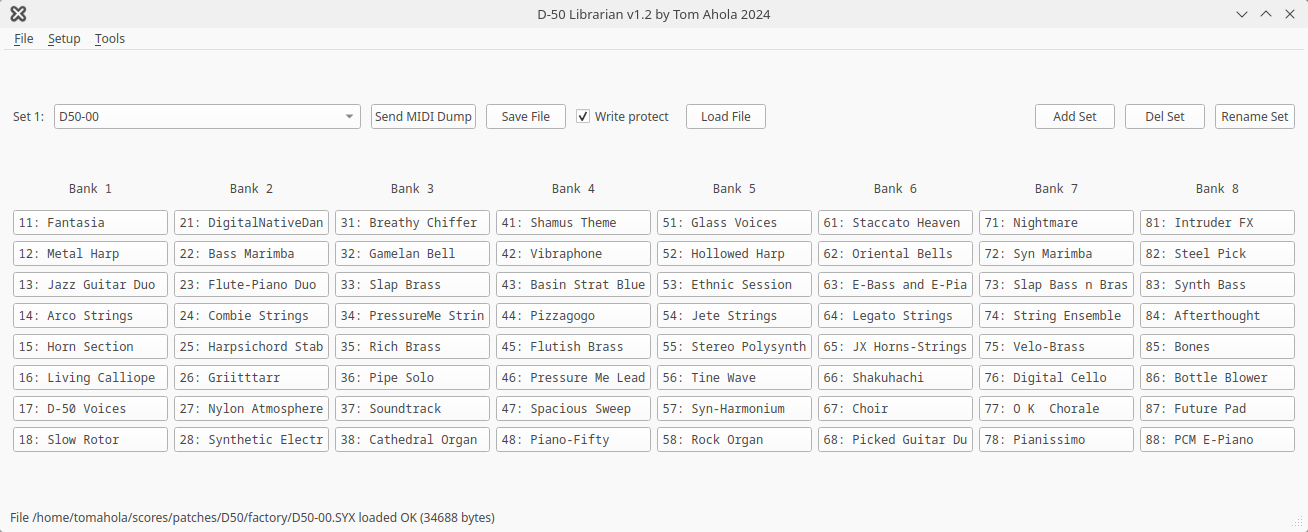
The main window of my D-50 Editor Librarian shows 64 patch buttons with patch names. These buttons send patches from the computer to the D-50 using MIDI System Exclusive (SysEx) data messages. One can have a large number of different sets of 64 patches, selectable by a dropdown list. A patch set corresponds to one .syx file with 64 patches and effects. This is the entire internal memory of the D-50, or a memory ROM Card. The program supports sending a full patch set of 64 patches to the D-50 internal memory via MIDI memory dump. It also supports downloading a full patch set from the D-50 via MIDI and saving it to a .syx file.
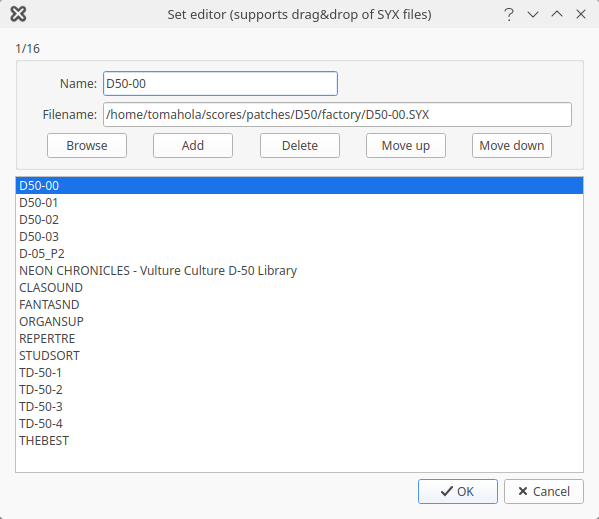
My D-50 editor features a set editor where you can add/delete/drag-and-drop .syx files, name the set and reorder the list of them. The set list is stored on the computer and is immediately available the next time the program is started.
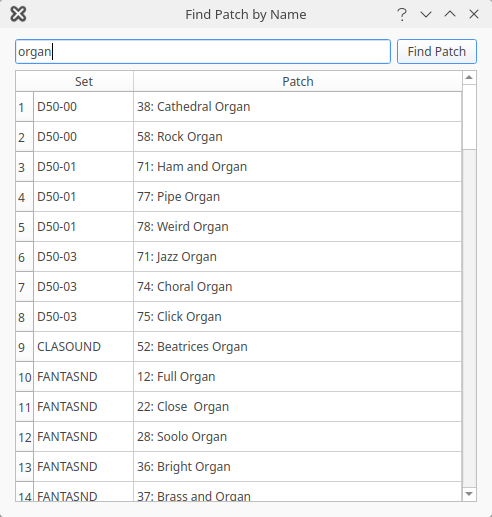
You can search for a string from all sets of patches to find a partial match of a patch name.
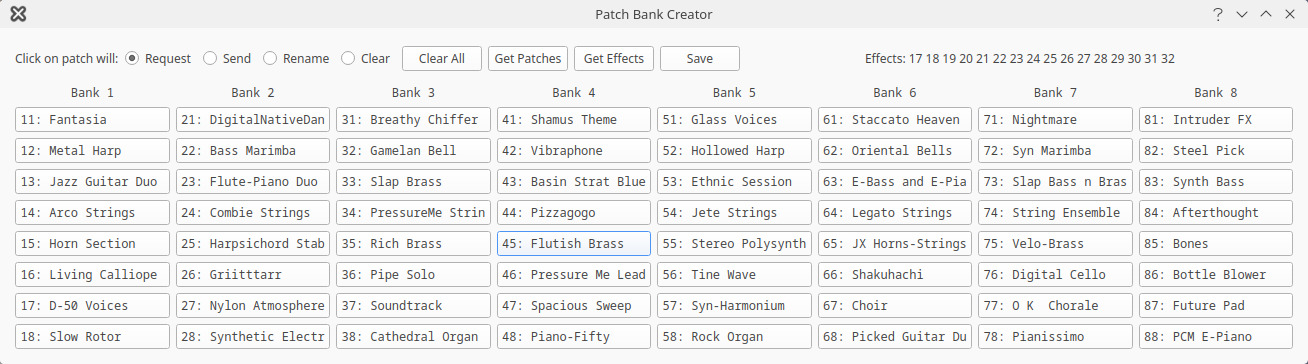
You can create a new set of 64 patches from existing patches, either retrieving them from the D-50 using MIDI or copying them from an existing patch set. This way you can reorder and collect a new set of favourite patches. The patches can also be renamed here. Effects can also copied over. The new bank can be saved to a .syx file.
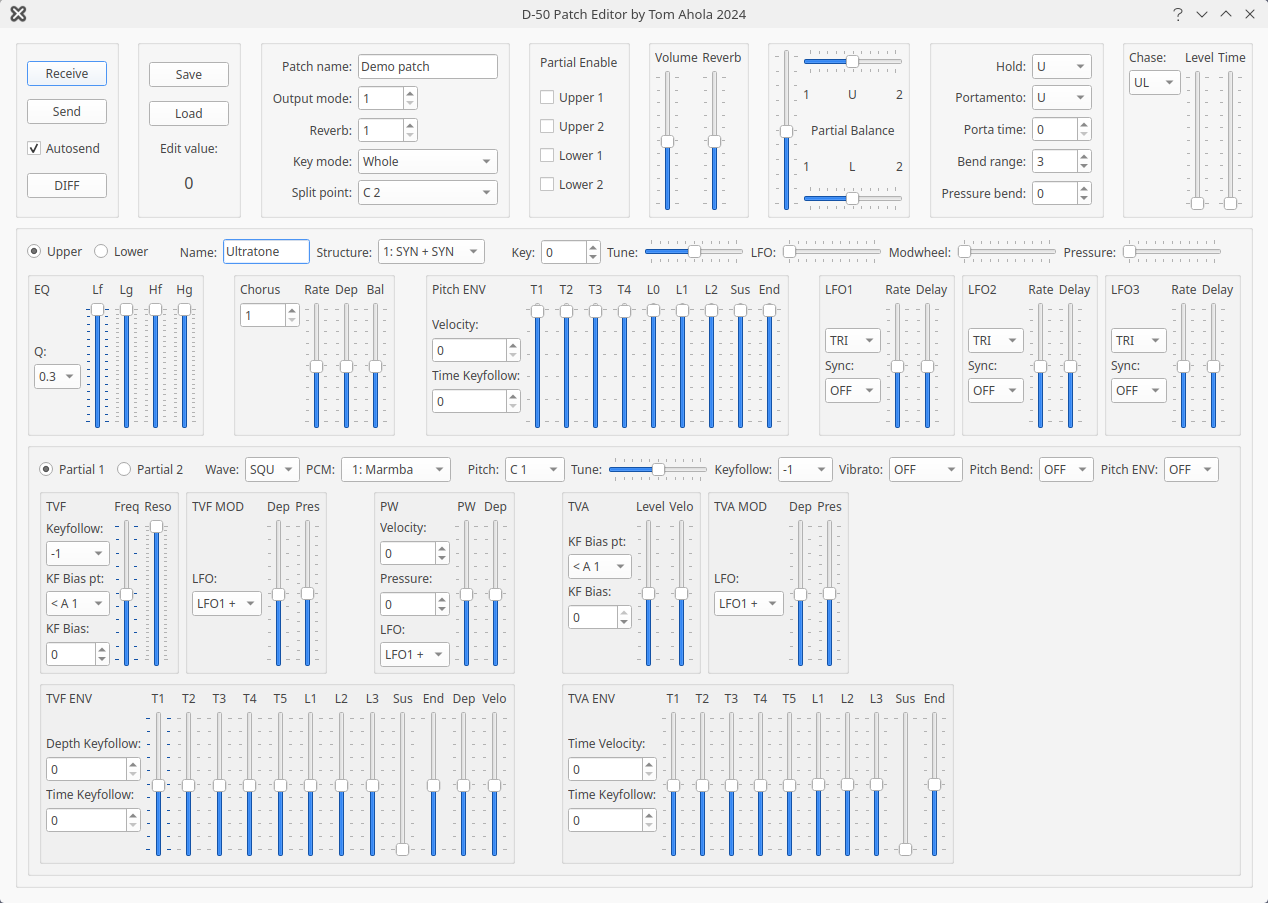
The editor allows editing all parameters of a patch. There are four partials, which can be edited one at a time. Parameters are sent to the D-50 via MIDI in realtime. With the Roland D-05 Boutique you can modify a sound while it plays. With the original D-50 you need to trigger a new note to hear the change, for many parameters, like the filter cutoff.
PS. This program is not available for download - it is only shown here as a "gallery" of my work. This is due to licensing and contract issues.
